
Body self-tanner: choose a format and plan an even, sunless glow
Thursday 29th October 2026
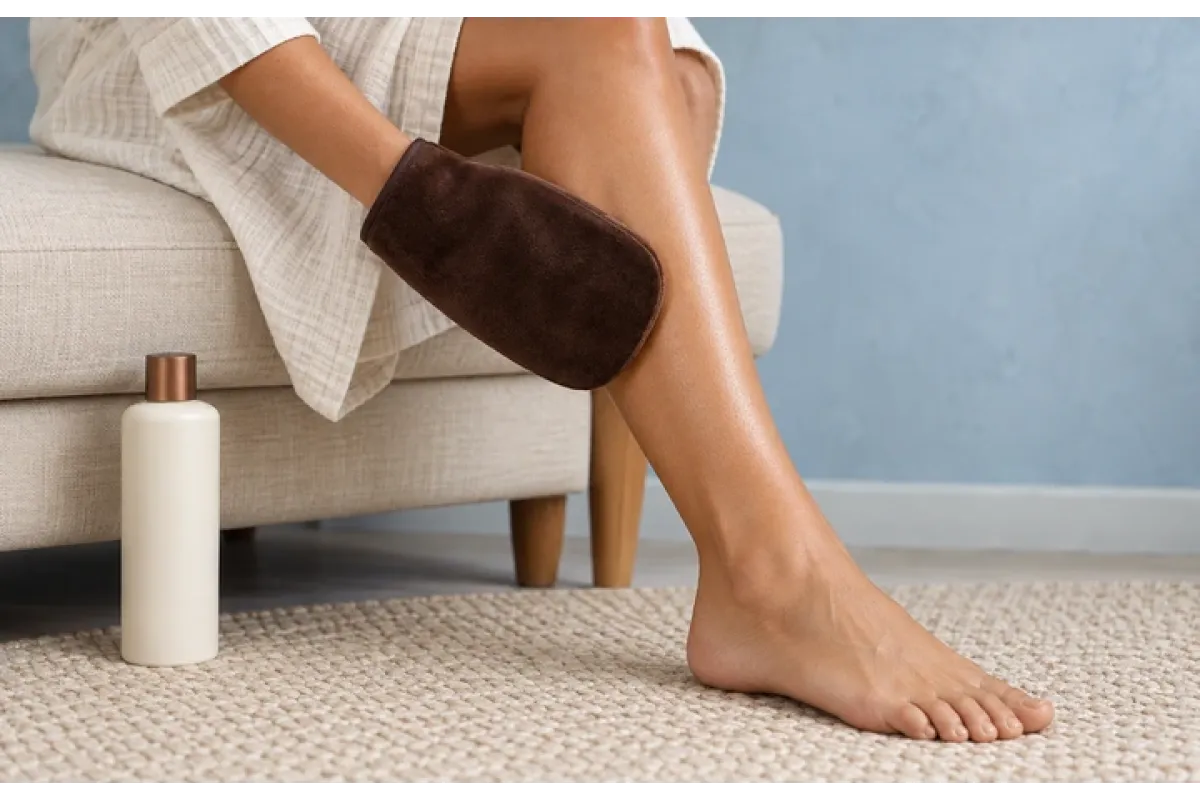
A little colour on the legs or arms can be a pleasant finishing touch, even when a beach holiday is nowhere on the calendar. Body self-tanner lets you plan that look at home. The most useful choice is a product whose texture, application and development time fit your routine, rather than the darkest result pictured on the bottle.
This guide explains how to compare formats, prepare without overdoing it and organise a first application. It also helps you assess the finished colour before deciding whether to repeat the process.
1. Decide what result you actually want
Start with a realistic brief: a subtle change for bare legs, a more noticeable colour for an occasion, or a gradual routine you can maintain. The same person might want different options for these situations. You do not need to choose the deepest shade to make a self-tanner worthwhile.
Think about the areas you intend to cover. Legs alone involve less application and drying time than the whole body. If you cannot comfortably reach your back, factor that in before planning a complete application. A result that is practical to repeat is more useful than an ambitious first attempt.
For a special event, make the first trial on an ordinary day beforehand. That gives you a chance to see the finished colour with your usual clothing and to learn how the product behaves. The time to discover its instructions is before opening the bottle.
Before purchasing, put the waiting period into your actual timetable. If it clashes with a workout, shower or bedtime, choose another application slot or a product with suitable directions. Ease of use includes having enough uninterrupted time; a familiar texture cannot make a longer development period disappear.
2. Compare four common formats
Format affects how you spread and measure the product. It does not, by itself, guarantee a particular depth of colour or an easier result. Compare the specific pack directions alongside this overview:
| Format | Practical appeal | What to check |
|---|---|---|
| Gradual lotion | Fits people who prefer a lotion-style application and incremental colour. | How long to wait before judging or repeating an application. |
| Self-tanning mousse | A foam texture that can be distributed with the recommended applicator. | Whether visible colour is a guide, and when to rinse if instructed. |
| Drops or concentrate | A compact format with product-specific dosing. | Whether to use directly or mix; the word “drops” does not decide. |
| Self-tanning spray | A different dispensing method for people who find it manageable. | Application distance, permitted areas and exposure precautions. |
For your first purchase, favour an application method you can control. Read whether the formula has an initial tint or develops without one. A coloured guide may help you see where you have applied, but it is not a reliable preview of the final shade.
3. Prepare a comfortable starting point
If exfoliation is already part of your routine and your skin tolerates it, plan it before tanning according to the product guidance. The aim is a reasonably even surface, not vigorous scrubbing. Do not chase a perfectly polished finish on skin that feels sore or irritated.
Check the starting condition required by your self-tanner: many are applied to clean, dry skin, but the pack remains the reference. Do not automatically cover the whole body in lotion underneath. Preparation around dry areas, and any waiting period after it, can differ between products.
Arrange the space before dispensing. Keep the applicator, a mirror, a towel and easy clothing within reach. Look at elbows, knees, wrists and ankles in good light so you can track the transitions instead of rushing at the end.
4. Apply in four manageable stages
Use the method and amount specified for the chosen product. This organisational sequence helps keep an application consistent:
- Choose a clear starting area. Work through manageable sections so you remember which areas are complete. Use the recommended mitt or your hands as directed.
- Spread with attention to edges. Check the joins between sections. Around bends and smaller areas, avoid repeatedly reloading the applicator onto the same spot. Follow any specific instructions for hands and feet.
- Finish the handling step. Clean your hands as instructed, including after removing a mitt. Deal with any accidental product on the bathroom surface before it becomes an overlooked mess.
- Respect the development period. Follow the directions about dressing, water, sweating and rinsing. Do not add another layer because the colour is not yet obvious during that interval.
There is no universal drop count, pump count or rinse time for all self-tanners. Keep a short note of the product, areas treated and the instructed waiting period. That makes your next attempt easier to adjust without changing everything at once.
5. Two examples from the shop
Collistar Magic Drops Body-Legs Self-Tanning Concentrate 125ml illustrates the body-and-leg concentrate format.
Vita Liberata Untinted Fabulous Gradual Tanning Lotion 200ml is an untinted gradual-lotion example.
Both appear in the Wellness Expert catalogue. Compare the actual packs for application, development and repeat use. These are examples of different formats, not a promise that one will give every person a particular shade. Use the instructions on the product you receive if packaging or formula information has changed.
6. Four reasons an application can become uneven
- Repeating an area unintentionally. An organised route helps you avoid adding a second portion to one shin while missing another section.
- Ignoring transitions. Look at the boundary between leg and foot, or forearm and hand, rather than treating the broad areas as the whole task.
- Judging too early. Compare the finished result after the stated development and rinse instructions. Freshly applied colour or bathroom lighting can mislead.
- Changing too much next time. Adjust one thing, such as distribution or the permitted amount, before replacing the whole routine.
If a patch looks darker, avoid repeated harsh rubbing to correct it immediately. Pause, check the brand's removal guidance and return to a comfortable routine. Stop using a product if it irritates your skin. For sprays, avoid inhalation and exposure of eyes or mucous membranes.
7. Common questions
Can I mix every self-tanning drop with body cream?
No. Some products are intended for mixing, while others are applied directly. Follow the exact method and ratio, if provided. Do not mix self-tanner into sunscreen; keep sun protection to its own directions.
Can the same body product go on my face?
Only if the product explicitly allows facial use. A body label does not establish that. Check permitted areas and use the correct instructions instead of adapting a body technique around the eyes or lips.
Does the colour mean I can skip sun protection?
No. A self-tanned appearance does not itself protect against UV. Keep your usual sun protection when needed; assess any SPF from the actual label, never from the depth of colour.
8. Make the next application easier
Choose a manageable format, plan the application and judge the completed result in ordinary light. If exfoliation is part of preparation, our body scrub guide helps with texture and gentle use. For the separate sun-protection step, see the everyday facial SPF guide.
References: Collistar: body self-tanning drops; Vita Liberata: gradual lotion; AAD: self-tanner application; FDA: sunless tanners.
Mila Serani, Skincare & Beauty Editor at Wellness Expert