
Can you wash your hair every day? Choosing a shampoo for frequent washing
Monday 09th November 2026
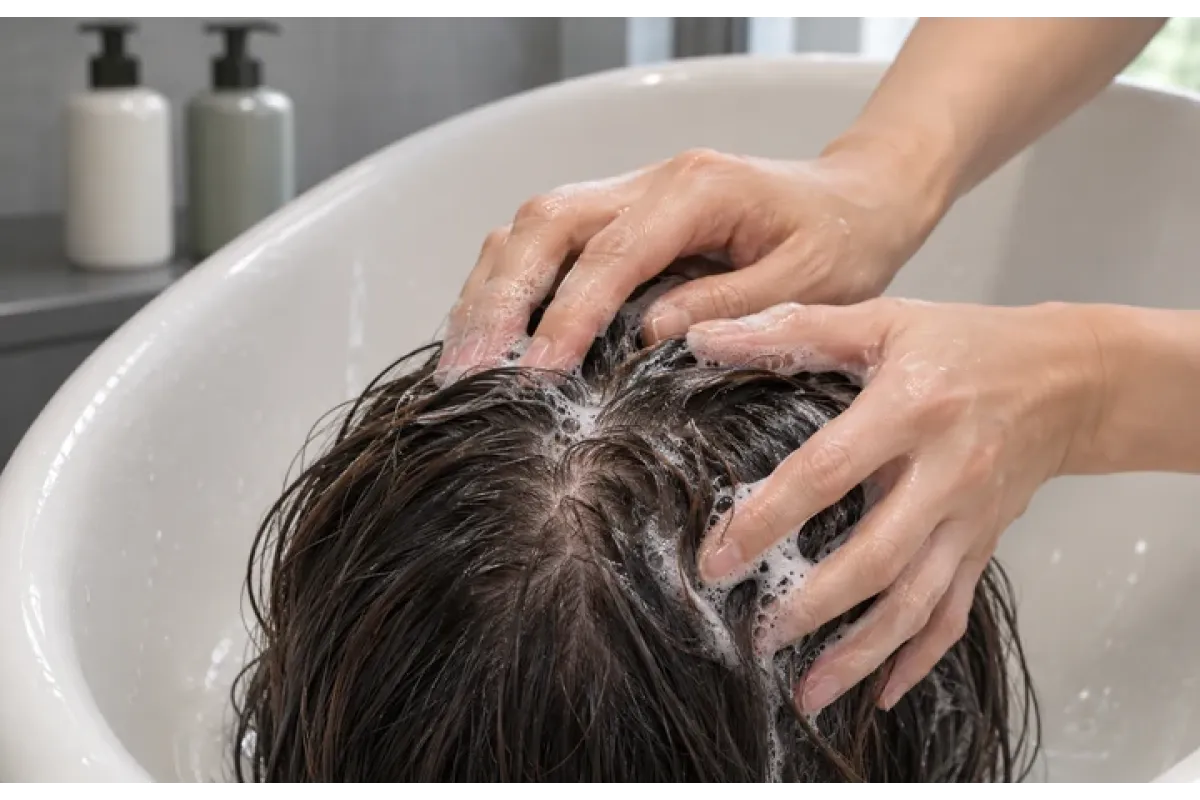
You can wash your hair every day if your scalp needs it and the routine feels comfortable. Choose a shampoo suited to your scalp, handle the lengths gently and reassess if you notice irritation or increasing dryness. A daily-use label describes a possible use; it does not mean everyone needs a daily wash.
Perhaps your roots look flat by the next morning, or you prefer washing after exercise. At the same time, your ends may feel dry. These observations can pull you towards opposite advice. A useful starting point is to judge the scalp and the lengths separately, then choose a routine you can repeat comfortably.
How often should you actually wash?
Oiliness, hair texture and what has accumulated since the last wash matter more than a fixed calendar. The American Academy of Dermatology notes that an oily scalp with straight hair may need daily shampooing. AAD guidance on washing frequency
| What you notice | What to assess | A practical starting point |
|---|---|---|
| Roots look oily the next day | Scalp freshness and how the hair falls | Try a gentle wash when needed, including daily if comfortable |
| Roots stay fresh but lengths feel dry | Whether another wash is necessary | Keep a longer interval that suits you |
| Sweat and styling products after activity | How your scalp feels once the hair dries | Wash if needed; adjust to the actual day |
| Discomfort after washing | The product and application method | Review the routine before simply adding more products |
Use this table as a way to organise observations. It cannot diagnose a scalp condition. There is little value in meeting an arbitrary number of wash days if your scalp remains uncomfortable or your hair becomes harder to manage.
What makes a shampoo worth considering for frequent use?
Start with the stated purpose: regular cleansing, sensitive scalp care or another clearly described need. Next, read the application directions and the current ingredient list on the bottle. The terms “daily”, “natural” and “sulphate-free” answer different questions; none selects a complete routine for you.
Decide what you need to change before buying. If the current shampoo cleans comfortably, a new schedule may be enough. If scent is something you specifically want to avoid, look for an explicit fragrance-free description. If your main concern is very dry lengths, consider where you apply cleanser and how you condition them alongside the shampoo choice.
Three products at Wellness Expert, with reasons to choose them
Davines NaturalTech Wellbeing Daily Shampoo, 250 ml
Davines NaturalTech Wellbeing Daily Shampoo, 250 ml is a daily-use option for regular cleansing. Davines describes Wellbeing as gentle and moisturising. Davines product information
Consider it when you want a straightforward shampoo for a routine you repeat often. Its relevance here is that everyday cleansing is its stated purpose. Try it as your main shampoo and assess scalp comfort and the feel of the lengths. There is no need to add all three products in this article to your bathroom shelf.
Keune Scalp Sensitive Soothing Shampoo, 300 ml
Keune Scalp Sensitive Soothing Shampoo, 300 ml is the option to consider when a sensitive scalp guides your purchase. Keune identifies this Scalp Sensitive formula as fragrance-free. Keune formula and directions
Why it fits: it offers a clear selection criterion if you want to avoid added fragrance while keeping a simple cleansing routine. Check that you are comparing this exact product, rather than assuming an older Derma Sensitive bottle has the same formula. Fragrance-free does not guarantee that an individual will tolerate every ingredient; stop using a product that causes discomfort.
Keune 1922 by J.M. Keune Essential Shampoo, 250 ml
Keune 1922 by J.M. Keune Essential Shampoo, 250 ml is described by Keune as a mild daily cleanser for hair and body. Keune Essential Shampoo information
It makes sense when fewer cleansing products suit your routine, for example in a gym bag or while travelling. Choose it for the convenience of the intended uses, and follow the bottle's directions for each area. An all-in-one format does not remove the need to judge how your own skin and hair feel afterwards.
A washing method that gives the lengths some attention
- Wet the scalp and hair thoroughly before distributing shampoo. Follow the amount and any contact-time instructions on your product.
- Work gently at the roots with your fingertips. Avoid vigorous scrubbing of the lengths.
- Rinse thoroughly. Repeat only if needed and consistent with the directions, rather than treating a second lather as compulsory.
- Use a conditioner appropriate to your hair, paying attention to the parts that need help with softness and detangling.
- Blot excess water gently and keep heat styling measured. Include drying and styling in your assessment of the whole routine.
Gentle handling matters alongside cleansing frequency. AAD advice on avoiding hair damage
How to assess a new routine without changing everything
Before the next wash, note how the roots and scalp feel. After drying, notice whether the hair is manageable and whether the scalp feels comfortable. Repeat those observations over a few normal wash days, keeping your usual conditioner and styling as consistent as possible.
Change one main factor at a time: the shampoo or the interval, for example. This is a practical comparison, not a treatment test. You do not need to wash more often just to complete it. If the routine works, keep it simple; if a product causes discomfort, discontinue it rather than waiting for a supposed adjustment period.
Questions that come up before buying
Should I force myself to wait longer between washes?
Choose an interval that fits your actual needs. You do not have to tolerate noticeably oily roots merely to follow someone else's timetable. Check the product, application and demands of your day together.
Can dry shampoo take the place of washing?
No. It absorbs oil but does not replace cleansing with shampoo and water. AAD explanation of dry shampoo Treat it as an occasional styling convenience when appropriate.
Does daily washing mean shampooing twice each time?
No. Frequency and the number of applications are separate choices. Read the directions and judge what needs removing on that wash day. More lather is not a goal by itself.
What if itching or flaking continues?
Ask a dermatologist about persistent symptoms or an obvious change in your scalp. A general daily shampoo cannot establish their cause. If you have a prescribed scalp treatment, keep to its instructions rather than replacing it with this shopping guide.
For your next purchase, choose one clear priority: regular cleansing, a fragrance-free option for a sensitive-scalp routine, or a convenient hair-and-body cleanser. Compare the exact product and size, then let everyday comfort guide whether it deserves a place in your routine.
Mila Serani, Skincare & Beauty Editor at Wellness Expert