
Leave-in hair care: spray, milk or cream without weighing lengths down
Tuesday 27th October 2026
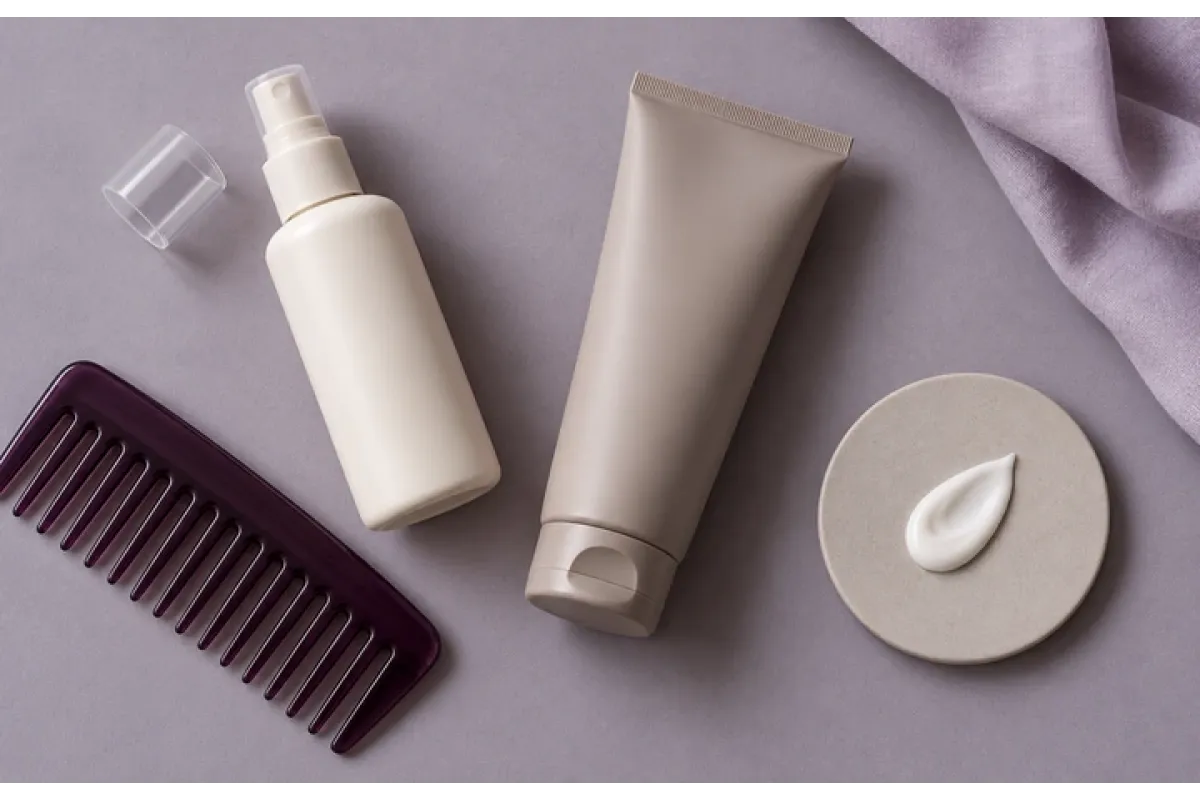
Your hair is washed and conditioned, yet the ends still catch on the comb or the lengths look less smooth than you would like. A leave-in product can be a useful next step. The difficulty is choosing between a mist, a milk and a cream without ending up with several overlapping products or hair that feels coated.
Start with the task you want to make easier: detangling, arranging the lengths before drying or tidying a few flyaways. This guide offers a practical way to choose a texture, place it where it is needed and judge the result once the hair is dry.
1. Decide what the extra step is for
“Leave-in” describes a product that stays on the hair rather than being rinsed away. It does not tell you everything about its purpose. A conditioning milk, a styling cream and a scalp treatment may all be leave-in products, but they have different application areas and directions. This guide concerns care for the lengths and ends.
Choose one main goal first. If a few tangled ends are the problem, look for a product intended to help with detangling. If you want a smoother finish, check that purpose in the description. If your routine already leaves the hair comfortable and easy to manage, an additional step may be unnecessary.
Note where the issue occurs. A long fringe, the ends and the whole head do not need the same application. A clear target makes it easier to use less and to recognise whether a product is actually helping.
2. Spray, milk, cream or oil: compare the format
The dispenser and texture influence how you distribute a product, but do not reliably rank its richness. A spray can contain a conditioning emulsion, and two creams can feel very different. Use the format as a starting point, then read the actual directions.
| Format | Practical advantage | What to check |
|---|---|---|
| Fluid spray or mist | Convenient for covering separated sections. | Whether it is intended for the lengths or roots, and how much one spray delivers. |
| Spray milk | An emulsion dispensed as a spray; useful when you like that application method. | Shake instructions, intended hair types and the finish after drying. |
| Leave-in cream | Easy to measure into the hands and place on selected areas. | Whether the recommended texture and dose suit your hair. |
| Serum or finishing oil | Can be convenient for a small finishing touch. | The specific purpose; shine does not automatically mean detangling or heat protection. |
For fine hair, make precision your priority: select a manageable dispenser and keep application away from areas that quickly lose volume. With thicker lengths, a cream may be easier to spread section by section. Neither observation replaces trying the product on your own hair.
3. Apply in four controlled steps
Follow the instructions for your particular product. For one intended for towel-dried lengths, this simple sequence helps you see where it goes:
- Remove excess water gently. Press with a towel rather than rubbing. Keep to the moisture level specified on the pack; do not assume every leave-in belongs on wet hair.
- Separate the lengths. Divide them into a few manageable sections. Identify the ends or areas that need help instead of treating every section identically.
- Measure and distribute. Use the directed amount as your reference, adjusting only as the instructions allow. Spread cream between your hands; use a spray from the stated distance. Add gradually where needed.
- Check the dried result. Finish your usual drying or styling, then assess movement, softness and how easily the strands separate. Wet hair alone cannot show the final finish.
Make one change at the next wash: the amount, the placement or the number of products. Changing all three at once makes it harder to learn what works. There is no universal pea-sized amount or spray count for every formula, length and dispenser.
4. Fit it around conditioner and styling
Keep rinse-out products in their intended role. A conditioner or mask designed to be washed away should not be turned into a leave-in simply by using less. Complete that step according to its directions before introducing a product meant to remain on the hair.
Start with one leave-in rather than a spray, milk and cream together. Decide whether it already delivers the result you want before adding a finishing oil. Several pleasant textures can still be more than your lengths need, especially when applied over the same small area.
If you use a dryer or heated tool, check the heat-protection claim and application instructions separately. The word “leave-in” alone does not establish protection. When a product serves more than one purpose, its directions should guide the routine; do not simply halve the amount of two products and assume equivalent protection.
5. Two catalogue examples to compare
Davines OI All In One Milk 135ml is a leave-in spray milk. It offers one format to explore.
Oribe Supershine Moisturizing Cream 150ml is a leave-in cream positioned for medium-to-thick hair.
Both are listed in the Wellness Expert catalogue. Compare them by the way you prefer to apply care, your hair and the current pack directions. The examples illustrate different formats; they do not establish that every milk is light or that every cream is too rich for finer hair.
6. Four habits that make the result harder to judge
- Applying everywhere by habit. Begin with the area that needs care. A product intended for lengths should not automatically be sprayed onto the scalp.
- Topping up before the hair dries. Wait to assess the finish rather than repeatedly adding more because wet ends still feel different from dry ones.
- Stacking similar products. When hair feels coated, review overlapping steps before buying another smoothing product. Simplifying can make the useful step easier to identify.
- Judging by shine alone. Also notice movement, comfort, detangling and whether you like the result later. A glossy photograph cannot tell you how a texture will feel.
If application leaves the lengths limp, try a more targeted placement or a smaller permitted dose next time. Rinse out a result you find uncomfortable rather than covering it with further products. Stop using a product if it causes irritation.
7. Common questions
Can I apply it to dry hair?
Only when that use is included in the instructions. A finishing product may allow a small amount on dry lengths, while another formula is intended before drying. Use the recommended method instead of transferring a technique from a different bottle.
Does leave-in care replace a hair mask?
It is not an automatic replacement. Judge each step by its purpose and the result you need. You may keep a simple conditioner and one leave-in, or use a mask on selected wash days. There is no requirement to include every format in one routine.
Will a cream permanently repair split ends?
A smoother cosmetic finish should not be confused with permanently reversing a split. Choose the product for manageability and the look you enjoy. If damaged ends remain a concern, discuss a trim and the broader care routine with your hairdresser.
8. Choose one format and give it a fair trial
Define the task, choose a suitable application method and assess the hair once dry. Our heat-protection guide explains the separate step before hot styling. If you also want a finishing touch, the hair oil guide helps you consider placement and shine without adding layers automatically.
Product references: Davines: OI All In One Milk; Oribe: Supershine Moisturizing Cream.
Mila Serani, Skincare & Beauty Editor at Wellness Expert