
Neck and décolletage care: when face cream is enough and how to choose a dedicated product
Wednesday 07th October 2026
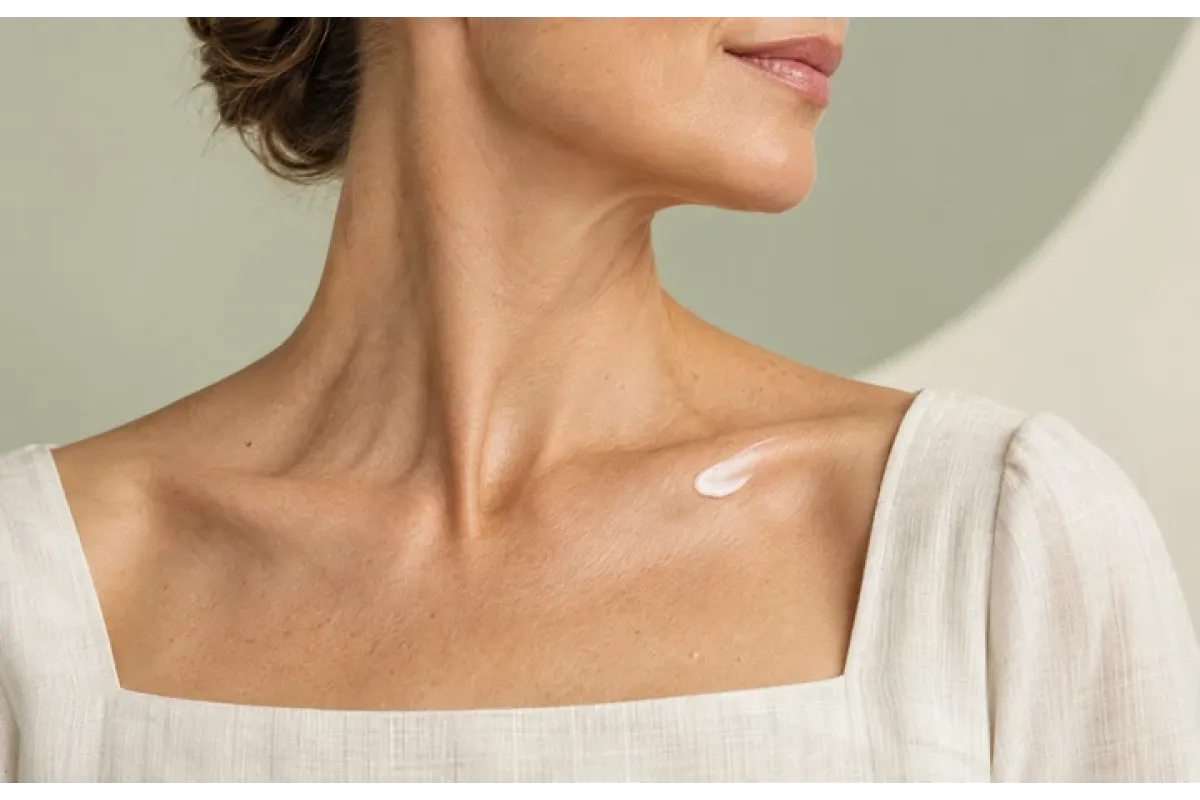
Facial skincare often stops at the jawline. Yet the neck and décolletage can also be exposed to sunlight, rub against clothing and need comfortable moisturising. A separate jar labelled “neck cream” is not essential for everyone. Here is how to decide whether your existing facial routine can extend below the chin, choose between a cream, gel and serum, and spend on a product that addresses an actual skincare need.
Mila Serani, Skincare & Beauty Editor at Wellness Expert
1. Start with your skin’s needs, rather than your age
The reason to add care is a particular concern, not a birthday: dryness after showering, tightness by the evening, an uncomfortably sticky cream or the wish to make sun protection more consistent. Identify one priority first. This makes it easier to decide whether you need a different product or simply a more regular routine with what you already own.
Skin comfort, the appearance of fine lines and pronounced loss of firmness are different expectations. The AAD explains that a cream cannot lift sagging skin. Treat cosmetic “lifting” language as a claim about appearance, rather than the outcome of a procedure. Keeping that distinction in mind helps you make a purchase with realistic expectations.
2. When a facial moisturiser may be enough
If the manufacturer allows your usual moisturiser to be used on both face and neck, and it feels comfortable and is well tolerated, it can make a convenient foundation. Check the directions and ingredients: tolerating a product on your face does not guarantee the same response on another area. Take particular care with formulas containing active ingredients.
A dedicated product makes sense when you want a different texture for your neck, your face and décolletage have different needs, or a separate format helps you remember the area. A light cream chosen for an oily T-zone, for example, may not feel comfortable enough on a dry upper chest. A rich evening cream may feel less convenient under a collar in the morning.
You do not automatically need two full layers of cream in the same place. A dedicated neck cream can replace your usual moisturiser for that area, unless its directions specify another combination. A serum, however, may be designed to be followed with a cream. Check that before you decide what to buy.
3. Cream, gel or serum: choose a practical texture
| Format | When to consider it | What to check |
|---|---|---|
| Face and neck cream | You want a simple routine with one product | Approved application areas and comfort on your neck |
| Dedicated neck cream | You want a separate formula or a more comfortable texture | Ingredients, directions and how it layers with SPF |
| Neck and décolletage gel | You prefer a lightweight texture | Any lingering tightness, stickiness or film |
| Serum for this area | You want an extra step for a specific concern | Whether you need to apply cream afterwards |
Cream: when lasting comfort matters
Consider how your skin feels several hours later, not just immediately after application. A suitable product spreads easily and does not leave you constantly adjusting your collar. A denser texture does not automatically mean better performance. Formulas differ, so judge the intended use, tolerance and convenience of regular application.
Gel: when you prefer a lighter feel
A gel can be an appealing morning choice or an option for someone who dislikes rich creams. But the word “gel” does not guarantee a non-sticky finish or enough moisturising for your particular skin. If comfort soon gives way to tightness, try another format rather than adding more and more layers.
Serum: when the extra step has a clear purpose
A serum is not a compulsory step for every neck. It makes sense when it adds a function you want and fits your current routine. Think through the whole sequence: serum, cream and sunscreen should sit comfortably together. Buying three new products at once also makes it harder to work out which one suits you.
4. Three examples from Wellness Expert
- Ainhoa Vegan COLLAGEN+ Neck & Decolletage Firming Cream, 50 ml — a dedicated vegan cream with Alaria esculenta extract. Consider it when you want a separate cream format for this area.
- Gatineau Defi Lift 3D Firming Neck & Décolleté Gel, 50 ml — a gel format for the neck and décolletage. An option to compare with cream when texture is a particular priority.
- Valetudo Planta Pura Hyaluronic Neck and Decolletage, 30 ml — a hyaluronic acid treatment for this area. Its directions call for following with the range’s cream; include that in your purchasing plan.
These examples illustrate different formats, rather than a universal ranking. Check the packaging for current ingredients and application instructions. Collagen in a product name is also not evidence that the formula replaces the skin’s own collagen.
5. A simple morning and evening routine
- Cleanse. Remove product residue and dirt with a gentle cleanser suitable for the area. A separate scrub is not needed to prepare your skin for cream.
- Add targeted care. If you use a serum, apply it according to its directions. You can leave this step out.
- Moisturise. Spread your chosen cream or gel without pulling the skin. Allow it to settle before getting dressed or applying the next product.
- Protect from the sun. For exposed skin, choose SPF 30 or higher, UVA/UVB protection and water resistance.
Remember the sides of the neck and any exposed upper chest. Reapply sunscreen every two hours outdoors and after swimming or sweating. Follow the directions for amount and application. The small residue left on your hands after doing your face should not be treated as a full application over a much larger area.
In the evening, remove sunscreen and daily dirt, then apply your selected care. Our article on morning and evening skincare order explains the sequence, while the daily facial SPF guide compares sunscreen textures. Follow the product’s directions for gentle application movements; vigorous massage is unnecessary.
6. Introduce active ingredients carefully
Do not automatically transfer your entire facial routine to the neck: an exfoliant, an active serum and retinol in the same evening. First check whether the product is intended for this area. If your skin is currently irritated, begin with simple, comfortable care and consider active products again once it has settled.
Try a new formula on a small area first, following the AAD’s product testing advice and any limits in the instructions. A home test does not guarantee tolerance, but can help reveal a reaction before wider application. Persistent burning, itching or a rash warrants stopping use and consulting a dermatologist.
If you choose retinol, introduce it gradually and keep daytime sun protection in place. Retinoids should not be used during pregnancy. For sensitive skin, discuss an individual routine with a qualified professional.
7. Common obstacles to comfortable care
- Too many layers. Assess stickiness by temporarily simplifying the sequence and changing one product at a time.
- Inconsistent application. Give the neck its own step instead of relying on what remains after treating your face.
- Choosing only for a lifting promise. Weigh that wording against moisturising needs, texture and tolerance.
- Expecting instant transformation. A single smooth-feeling application does not show the outcome of continued care.
8. How to assess your purchase
Start with practical questions: is the product pleasant to apply, does your skin feel comfortable by evening, and can you wear your usual clothes and reapply SPF easily? Then observe appearance under consistent lighting. Avoid replacing the whole routine every week: the AAD advises allowing most anti-ageing products at least six weeks. This is an observation timeframe, not a promise of a particular result.
Before ordering, name your main concern, choose a texture you enjoy and check whether you need another product alongside it. One well-tolerated moisturiser and consistent sun protection are often a practical starting point. If pronounced sagging or persistent skin changes remain your main concern, discuss your cosmetic choices with a dermatologist.
Good neck and décolletage care means a clear routine, a suitable texture and regular attention to the area. A dedicated product is useful when it makes that routine easier and supports the cosmetic concern you have chosen to address.