
Skin prep for makeup: choosing moisturiser and primer for an even foundation finish
Saturday 10th October 2026
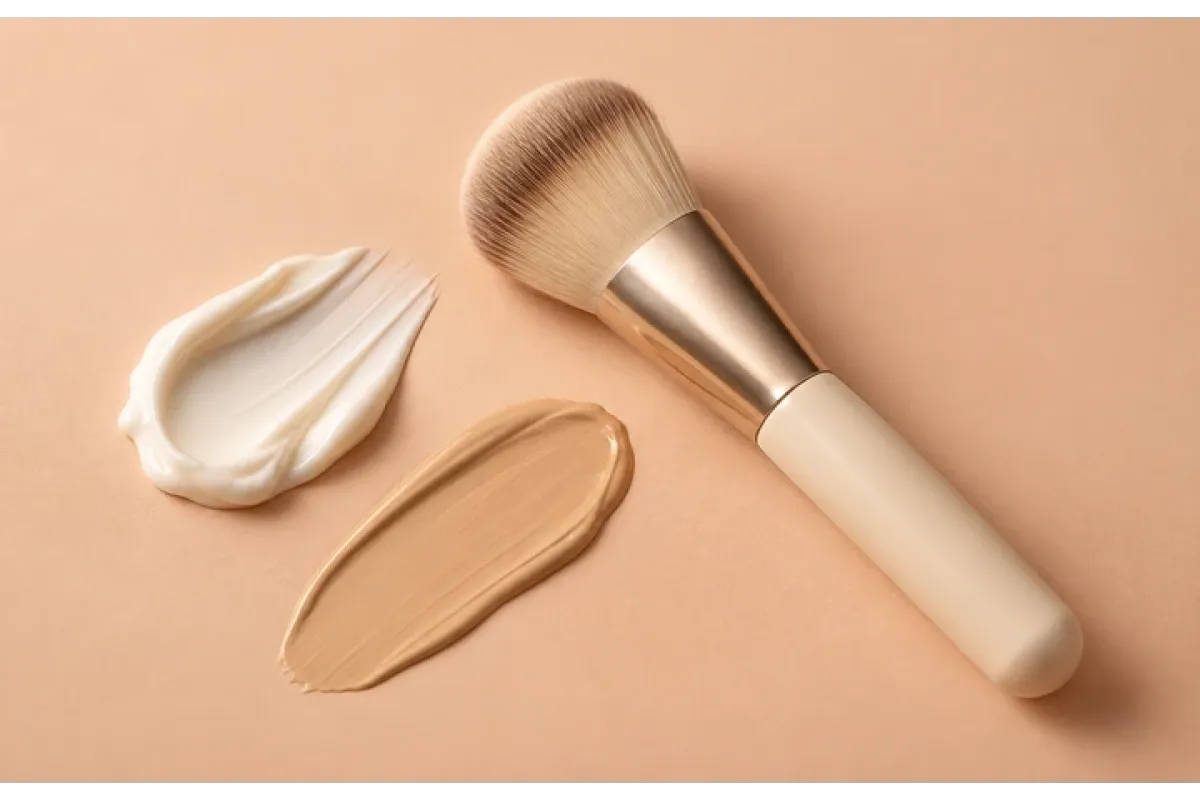
The same foundation can look different depending on what you apply underneath it. It may emphasise dry patches, develop shine on the forehead or roll into little flakes as you blend. Buying a fuller-coverage foundation does not always solve this. Start with skin preparation: suitable moisturising care, sunscreen and, when needed, a makeup primer. A useful routine helps you achieve even coverage without unnecessary layers and keeps your skin comfortable throughout the day.
Identify what prevents an even finish
Look at your skin before makeup, straight after foundation and a few hours later. These are three different points of assessment. If unevenness is already visible before foundation, consider your skincare; if the finish changes later, also check the amount of product and how you set it.
- Foundation highlights dry patches. Focus on comfortable moisturising care and gentle application. Extra powder or heavier foundation may make texture more noticeable.
- Shine develops mainly in the T-zone. Choose care and setting by area. You do not have to mattify dry cheeks simply because your forehead is shiny.
- Products roll into little balls during blending. Check the combination of layers, quantities and application movements. Product pilling and skin flaking are different observations.
Avoid trying to address everything with one primer. First choose your main aim: softer dry areas, shine control or a combination of products that sits better together. This makes it easier to identify which change actually improved the result.
Moisturiser under makeup: comfort first, then finish
Choose moisturiser for your skin's condition, rather than a promise of the “perfect base” for every foundation. Useful signs are the absence of tightness and a texture you enjoy once spread. If your usual cream already feels comfortable under makeup, you do not necessarily need a separate preparation product. You can keep a richer evening routine for the evening and use suitable daytime care in the morning.
The shop stocks NovExpert Paris Magnesium Velvety Hydrobiotic Cream 30 ml, a cream for sensitive skin. Its listing recommends a small amount and a five-minute wait before makeup. This is the direction for that product, rather than a universal waiting time for all moisturisers. Assess whether its texture suits your skin and foundation; a range name alone cannot guarantee that every layer will work together.
For a more matte appearance, a different example is Maria Galland 300 Velvet Mattifying Cream. The shop describes it as mattifying care that helps manage excess sebum, applied to cleansed skin morning and/or evening. Mattifying cream and primer are not necessarily interchangeable. Check that your cheeks remain comfortable and foundation applies easily over your care.
Do you need primer, and what should it do?
Primer is an additional tool for a particular makeup result. It need not feature in every routine and does not replace skincare. If foundation already spreads evenly and wears as you want, first try your usual care without an extra layer. For combination skin, applying primer only where its function is needed can be more convenient.
Hydrating primer
Consider trying this when you want easier application and a less dry finish. However, another moisturising layer over a rich cream may be unnecessary. Start with the manufacturer's recommended amount and assess the whole combination, rather than only how the primer feels on its own.
Mattifying primer
Its job is to reduce unwanted shine in makeup. On combination skin, try T-zone application if the directions allow it. If your cheeks look better without primer, there is no need to apply it everywhere. A matte result should still feel comfortable, rather than leave skin feeling dried out.
Smoothing primer
Choose this for a visually more even surface. Assess the appearance of pores and lines in the finished makeup, without expecting primer to permanently change the skin's structure. Avoid layering several primers for the same aim before checking how each performs separately.
Where does sunscreen fit?
The AAD recommends moisturiser and/or sunscreen before makeup. A practical morning sequence is cleansing, necessary skincare, sunscreen, then optional primer and foundation. Compare the details of your usual routine with our guide to morning and evening skincare order. Do not mix everything in your palm to shorten the routine: apply sunscreen according to its directions.
The AAD advises SPF 30 or higher, UVA/UVB protection and water resistance. Do not reduce sunscreen quantity to make foundation easier to apply; reconsider an optional serum, moisturiser or primer instead. Follow the rules for reapplication too. A primer without appropriate protection is not sunscreen, and SPF numbers in different layers should not be added together.
What to check when products pill
For a home comparison, first simplify your routine to necessary care, sunscreen and foundation. Let each product spread and settle according to its instructions. Avoid adding the next layer while the previous one is still moving freely over the skin. Different textures behave differently, so a single timer for every product is not particularly useful.
Then check optional product quantities and your technique. Try less moisturiser or primer if the directions permit, and lighter movements instead of repeatedly rubbing the same spot. Do not change cream, SPF, primer and foundation at once: it makes identifying where the little rolls appear difficult. Compare combinations while keeping sunscreen quantity the same.
Judge compatibility in your actual routine. One “water-based” label or one ingredient cannot replace that check. If a particular pair causes problems, try changing the texture of one product. Do not attempt to remove visible flaking with an aggressive scrub just before makeup; if skin feels uncomfortable, simplify your care first.
Setting: a separate job after foundation
Powder finishes makeup rather than doing the work of moisturiser or primer. MAKE UP FOR EVER HD Skin Setting Powder 18 g is an example of loose setting powder in the shop. The manufacturer describes a soft matte finish and shine control. Choose the shade for the result you want. Start with a small amount where setting is needed and check whether dry texture has become more visible.
| What you want to improve | First step | Also check |
|---|---|---|
| Foundation highlights dryness | Comfortable moisturising care | Whether hydrating primer is needed and powder is excessive |
| T-zone shine | Suitable care for combination skin | Local mattifying and setting |
| Pilling during blending | Simplify the combination of layers | Optional product quantities and application movements |
| Uneven finish | Check foundation application | Smoothing primer and targeted setting when needed |
How to test a new combination at home
The AAD recommends testing a new product on a small area twice daily for 7–10 days. After checking tolerance, assess separately how it behaves in makeup. Choose an ordinary day for this, rather than the morning of an important event.
- Change one step. Keep your usual cleansing, SPF and foundation, replacing only the moisturiser or adding your chosen primer.
- Follow the directions. Respect the product's amount and waiting time, and do not cut back on sunscreen.
- Assess immediately and later. Look at evenness, dry areas and shine under the same lighting.
- Record the result. Note the products and how your skin feels. A good combination should remain comfortable after several hours of wear.
What to check before buying
- Purpose. Moisturising, mattifying, smoothing and setting are different jobs; not every job requires a new product.
- Texture. Choose for dryness and oiliness in individual areas, rather than only a skin-type label.
- Application. Consider the directions, the wait before makeup and the product's place in your morning routine.
- The whole combination. Assess moisturiser alongside your SPF and foundation, and powder on the finished coverage.
If choosing skincare itself is the difficult part, see our article on gels, emulsions, creams and balms. Start with a comfortable foundation of care, adding primer or setting for a specific result. Even coverage is easier when each layer has a clear job and your skin stays comfortable.
Mila Serani, Skincare & Beauty Editor at Wellness Expert